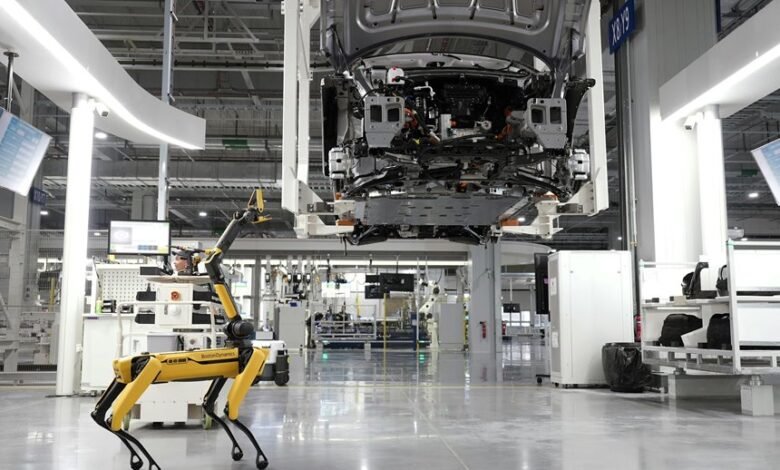
The Smart Automation System 120580101 presents a notable advancement in operational performance across diverse sectors. Its design focuses on streamlining processes and optimizing resources, thereby facilitating improved energy management. By incorporating data-driven decision-making, organizations can significantly reduce waste and enhance productivity. This prompts a closer examination of its key features and their impact on business efficiency and adaptability. What specific advantages does this system offer in practical applications?
Key Features of the Smart Automation System 120580101
While the Smart Automation System 120580101 offers a range of advanced functionalities, its key features are particularly noteworthy for their impact on operational efficiency and user experience.
The system incorporates a user-friendly interface that facilitates seamless interaction, enhancing accessibility.
Additionally, its robust energy management capabilities optimize resource utilization, promoting sustainability while empowering users to exercise control over their energy consumption, thus fostering autonomy.
How Smart Automation Enhances Operational Efficiency
As organizations increasingly adopt smart automation systems, they experience significant enhancements in operational efficiency, driven by streamlined processes and data-driven decision-making.
Process optimization becomes achievable through automation, allowing for precise resource allocation that minimizes waste and maximizes output. This not only accelerates workflow but also empowers teams to focus on strategic initiatives, ultimately fostering a culture of innovation and agility within the organization.
Real-World Applications of the Smart Automation System
Smart automation systems are increasingly being integrated across various industries, demonstrating their versatility and effectiveness in addressing complex operational challenges.
In home automation, these systems enhance energy efficiency and user convenience through intelligent controls.
Similarly, in industrial robotics, they streamline production processes, improve precision, and reduce labor costs, ultimately fostering an adaptive environment where operational excellence can thrive and innovation is encouraged.
Measuring the Impact of Smart Automation on Business Performance?
How can the impact of smart automation on business performance be effectively quantified?
By utilizing key business metrics such as productivity rates, cost savings, and error reduction, organizations can assess automation benefits comprehensively.
Data analytics tools enable the tracking of performance changes pre- and post-automation implementation, providing a clear framework for evaluating tangible outcomes that foster an environment of operational freedom and efficiency.
Conclusion
In conclusion, the Smart Automation System 120580101 serves as a game changer, enabling organizations to optimize processes and enhance operational efficiency. By harnessing data-driven insights and promoting sustainable practices, it equips businesses to navigate the complexities of the modern market. As companies strive to stay ahead of the curve, embracing such innovative solutions is essential. Ultimately, investing in this technology positions organizations to not only weather the storm but also thrive in an ever-evolving landscape.